Verified CAD Monitor Bundles: Dual-Setup Under $350
By Ravi Patel • 2nd May
Introduction
Building a reliable architectural visualization monitor bundle for CAD workflows doesn't require a $1,500 desk setup. For architects, CAD technicians, and 3D modeling professionals, a disciplined dual-monitor configuration under $350 is entirely achievable, but only if you verify specifications before checkout.
The problem isn't cost; it's specification drift. You'll find countless "budget CAD bundles," but when your 27-inch curved panel arrives and your arm's VESA plate won't fit, or your 4K display maxes out at 60 Hz over HDMI 2.0, you're facing returns, regret, and wasted weeks. I learned this lesson the hard way: a $60 bargain arm for a midweight 27-inch. Three months later, the tilt joint drifted, re-tightening stripped the nylon insert, and I'd already invested time and mounting holes. That failure taught me to map price against hinge design, materials, and warranties across dozens of models, and I've saved money ever since by spending slightly more once.
This guide establishes a verification-first framework for CAD software monitor accessories that prioritizes mechanism durability, VESA compatibility, and cable protocol certainty. The goal: one purchase that doesn't betray you in 18 months.
Why $350 for Dual Displays, and What That Budget Actually Buys
A single quality 27-inch or 32-inch 4K monitor costs $250-$400 today. Add competent architectural drafting display setup components (arm, stand, cables, cable management), and the budget evaporates fast.
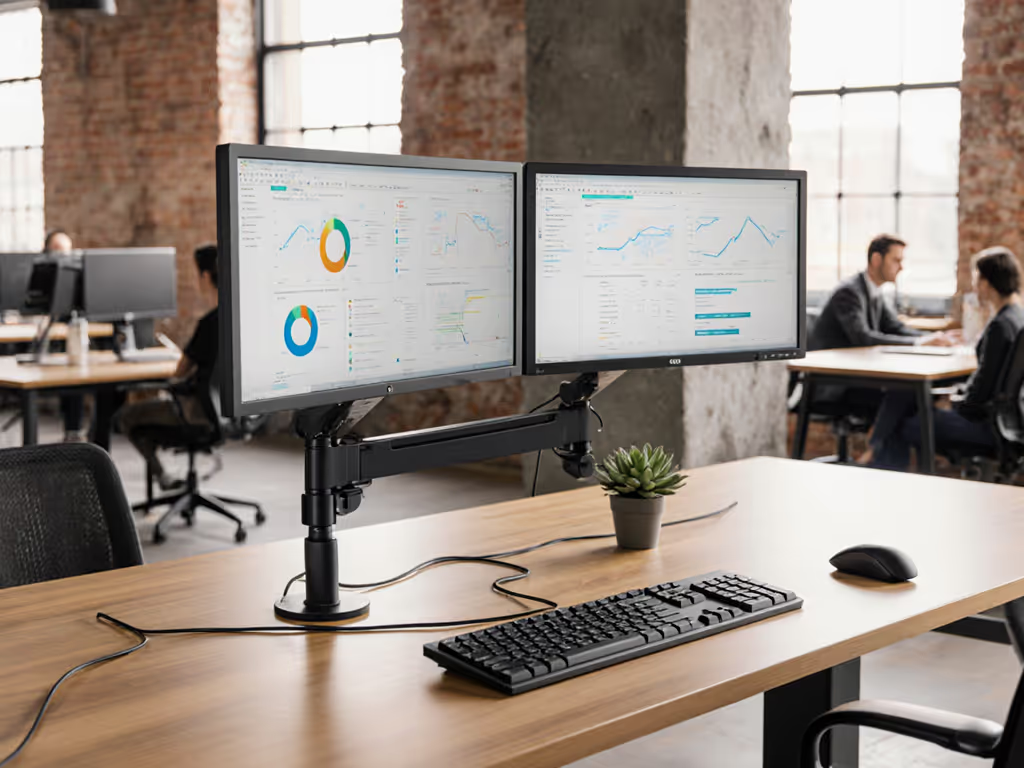
The constraint is pragmatic, not irrational. For most BIM software monitor requirements (Revit, ArchiCAD, Navisworks), two 1440p or 2K displays at 60 Hz unlock the genuine workflow win: CAD viewport on one monitor, palettes and project trees on the other, zero window-shuffling. This isn't luxury; it's productivity.
| Budget Tier | Display Count | Typical Resolution | Arm Complexity | Realistic Lifespan |
|---|---|---|---|---|
| Under $150 | 1× 24" FHD | 1920×1080, 60 Hz | Basic single-arm | 18-24 months |
| $150-$250 | 2× 24" or 1× 27" 2K | 2560×1440, 60 Hz | Dual-arm or stand | 24-36 months |
| $250-$350 | 2× 27" 1440p or 1× 32" 4K | 1440p @ 75+ Hz, 4K @ 60 Hz | Full-motion dual arm + cables | 36-48 months |
| $350+ | Ultrawide + secondary, or dual 4K | 5120×1440 or 4K @ 120 Hz | High-payload arms, active DP/HDMI | 48+ months |
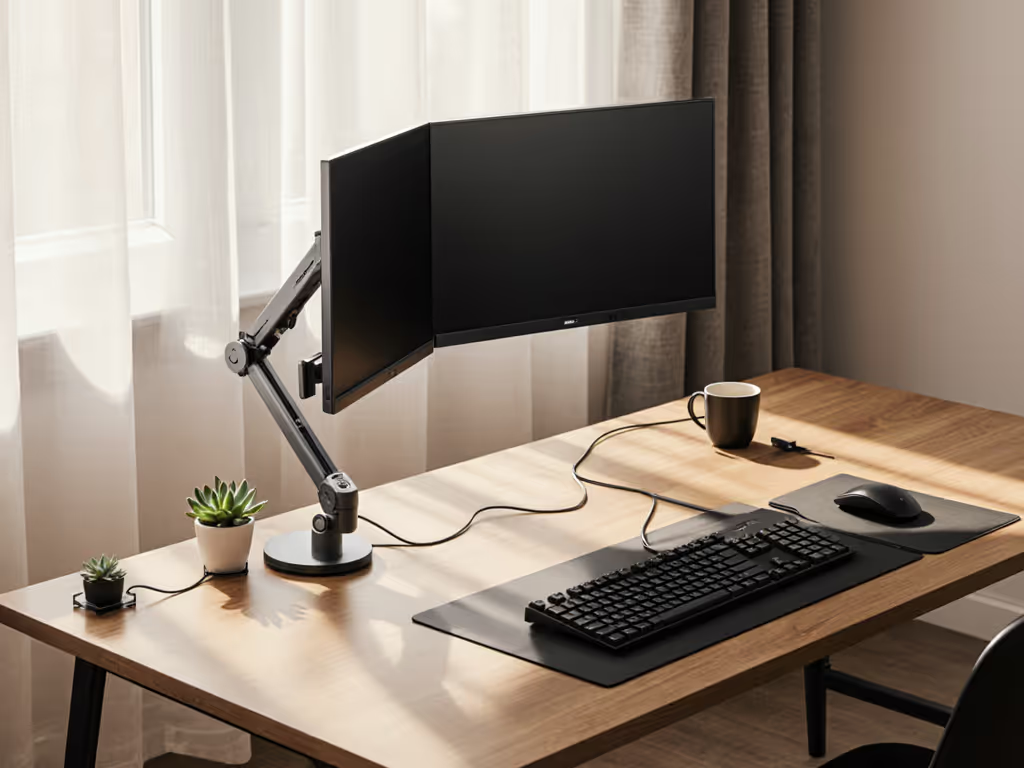
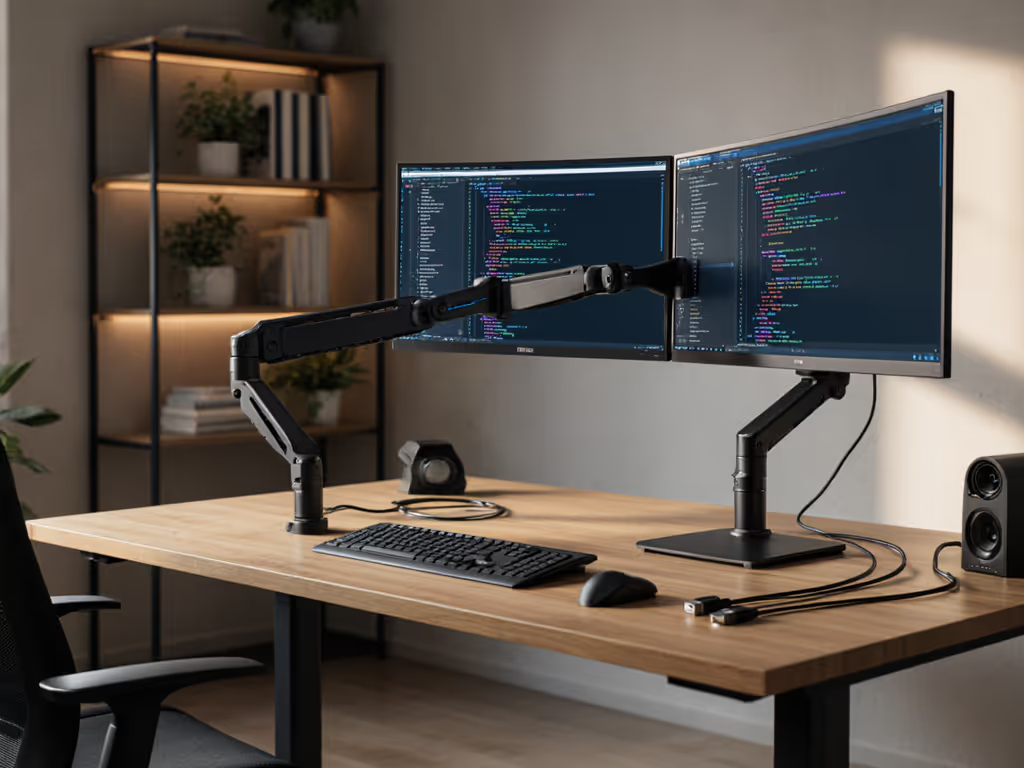
The sweet spot for 3D model rendering workspace stability and Revit workflow optimization tools sits precisely in the $250-$350 tier: two 27-inch 1440p IPS displays on articulating arms, fed by a single USB-C or DisplayPort 1.4 connection, with modest cable management and hinge redundancy.
The Core Problem: Specifications Lie; Mechanisms Don't
Cheap arms fail for a single reason: undersized hinges. A $40 arm claims "up to 6 kg" but uses stamped steel bushings and plastic ball-studs designed for 2 kg sustained load. At 3-4 kg (a typical 27-inch display), friction degrades within weeks. The arm drifts downward, you re-tighten the tension screw, the nylon insert strips, and you're buying a replacement arm while your monitor hangs on a makeshift solution.
Quality arms ($100-$150) use precision ball-bearings or sealed ball-studs, dual-tension springs calibrated for your load, and replaceable friction cartridges. They're designed to be serviced, not discarded. Not sure which mechanism suits your setup? See our gas spring vs counterbalance arms guide for stability trade-offs.
Pay once for the hinge you'll never think about.
That's not marketing. It's arithmetic. A $120 arm with a 5-year limited warranty and available spare parts costs less in total (purchase + replacement risk + time) than three $40 arms replaced over the same period. This principle (buy for mechanisms, not marketing) is the foundation of the $350 bundle.
What to Verify Before Purchasing: A Specification Checklist
1. VESA Pattern and Weight-Load Curve
Every arm manufacturer publishes a load table. Find it. If they don't publish it, the arm isn't vetted.
Your monitor's weight and center-of-gravity (CG) offset matter as much as the load limit. Curved and ultrawide displays shift the CG forward, requiring heavier counterweight or stiffer springs. A 27-inch curved panel (typically 3.2 kg with a 6-8 cm CG offset) needs a different arm than a 24-inch flat (1.8 kg, 3 cm offset), even if both claim "up to 6 kg."
Verification action: Cross-reference your monitor's exact weight and footprint dimensions in the arm's published load tables. Request a load curve if available. If the arm won't guarantee safe support for your specific display, it's not rated for you.
2. Mounting Interface and Desk Compatibility
Clamp vs. grommet is a false choice; it's a trade-off that must match your desk.
| Mounting Type | Desk Depth Needed | Overhang Tolerance | Adjustment | Cost |
|---|---|---|---|---|
| Desk Clamp | 20-30 cm from edge | +/- 2-3 cm | Fast (lever/screw) | Baseline |
| Grommet Post | Requires 35-40 mm hole | Less critical | Moderate | +$15-$40 |
| Monitor Stand + Riser | 30-40 cm | Limited by footprint | Slow | +$50-$100 |
Standing desks with limited depth or glass tops often reject clamp arms. Standing desks at full height amplify wobble unless the arm's base is rock-solid.
Verification action: Measure your actual usable depth (from desk back edge, accounting for keyboard deck or cable tray). Verify clamp jaw depth and grommet hole compatibility with your desk material. If you use a standing desk, simulate full height and confirm arm stability before purchase.
3. Cable and Dock Certifications
For dual 1440p or 4K setups, cable and dock standards directly control resolution and refresh rate. This layer breaks more dual-display setups than hardware incompatibility.
Critical cables and their limits:
- DisplayPort 1.4 HBR3: 4K @ 120 Hz, USB-C alternate mode, daisy-chaining support. The gold standard for 3D model rendering workspace.
- HDMI 2.1 (Fixed Rate Link): Supports 4K @ 120 Hz on paper. Many budget monitors claim HDMI 2.1 but use HDMI 2.0 silicon. Verify the actual bandwidth in the spec sheet.
- USB-C PD: Check exact wattage. A 60W dock won't charge a 96W laptop and drive two 4K displays simultaneously.
Real failure example:
- Setup: Two 1440p @ 100 Hz displays, RTX 4070 GPU (dual DP 1.4 outputs), USB-C dock claiming "dual 4K support."
- What breaks: The dock's DP 1.4 output is actually DP 1.2 internally. Daisy-chaining two 1440p @ 100 Hz requires DP 1.4 HBR3 on both the dock and displays. HDMI fallback caps at 60 Hz.
- Result: You paid for 100 Hz, you're stuck at 60 Hz.
Verification action: Request the dock's internal DP version, actual USB PD wattage, and a published compatibility matrix for your GPU and monitor count. Test dual-display mode with your exact GPU before returning the dock. To navigate standards and compatibility changes, read our USB-C monitor accessories guide.
4. Arm Hinge Design and Warranty Depth
The hinge is the mechanism. Cheap arms use stamped steel bushings and plastic ball-studs; they wear quickly and require constant re-tightening. Quality arms use sealed ball-studs or precision bearings, dual-tension springs, and replaceable friction cartridges.
Red flags:
- 1-2 year warranty or no published warranty.
- "Manufacturer defect" exclusions that don't cover hinge wear.
- No spare parts availability (screws, washers, springs, ball-studs).
- Warranty void if you open the arm or adjust hinge tension.
- 15-25% restocking fees on returns.
Green flags:
- 3-5 year limited warranty covering mechanical components.
- Spare part kits available ($15-$40).
- 30-day full refund or exchange window.
- Designed for field serviceability (no proprietary fasteners).
For a $300 dual-arm setup, investing $30-$50 upfront in a serviceability kit (spare washers, springs, lock washers) can extend lifespan by 3-5 years and eliminate downtime.
Tiered Configurations Under $350
Tier 1: Single 32-Inch 4K + Full-Motion Arm (~$300-$350)
Best for: CAD drafting with heavy 3D viewport focus; secondary application windows off-desk.
| Component | Budget | Rationale |
|---|---|---|
| 32" 4K IPS (60 Hz, HDMI 2.0 + DP 1.2) | $220-$260 | Proven for CAD; strong VESA (100×100); factory-calibrated ΔE < 2 for rendering verification. |
| Single full-motion arm (steel hinge, 3-8 kg rated) | $70-$100 | Verify VESA and weight load for 32". Most support 100×100. Steel pivot, 5-year warranty, serviceability. |
| DP 1.4 cable (HBR3 certified) or high-speed HDMI | $12-$18 | Premium cable prevents signal dropout on longer runs (> 5 m). |
| Cable clips, surge protection | $8-$15 | Standing desk stability depends on cable management. |
| Total | $310-$393 | Likely $10-$43 over budget; trim by using a tilting desk stand ($20-$30 savings). |
Trade-off: Single display means frequent window switching. Ideal for lightweight CAD (2D drafting, simple 3D). Overkill for pure browsing.
--
Tier 2: Dual 27-Inch 1440p @ 60-75 Hz (~$280-$350)
Best for: Architects and CAD technicians running Revit or similar; model viewport + palettes + project tree across two displays.
| Component | Budget | Rationale |
|---|---|---|
| 2× 27" 1440p IPS (75-100 Hz, DP 1.2, HDMI 2.0) | $130-$170 | Each display $65-$85. Lightweight (3-3.5 kg each), VESA 100×100, proven for CAD. Flat panels are arm-friendlier than curved. |
| Dual-articulating arm (independent tilt/pan, 2-3 kg per monitor) | $80-$120 | Steel bushings or sealed ball-studs, minimum 3-year warranty. Pivot-point stability is critical. |
| 2× DP 1.2 cables (daisy-chain capable if both displays support it) | $16-$24 | Allows single GPU port connection if daisy-chaining enabled. |
| Cable organizer, velcro straps, sleeves | $8-$12 | Standing desk stability critical with dual monitors. |
| USB-C hub (optional, for keyboard/mouse/dock consolidation) | $30-$50 | Convenience; not mandatory if GPU has dual ports. |
| Total | $264-$376 | Within budget. Trim by $10-$20 using a passive hub instead of USB-C. |
Verdict: Strongest ROI for architectural visualization monitor bundle workflows. Dual 1440p provides workspace without exceeding typical standing desk depth limits or straining the arm hinge. For vetted budget picks, see our best dual monitor arms under $150.
--
Tier 3: Hybrid Single 4K + Single 1440p (~$320-$350)
Best for: 4K primary (rendering preview, high-fidelity modeling) + 1440p secondary (palettes, references, communication).
| Component | Budget | Rationale |
|---|---|---|
| 27–32" 4K IPS (60 Hz, DP 1.4 or HDMI 2.1) | $180-$240 | Primary for detail work. 60 Hz sufficient for CAD; faster refresh adds minimal value. |
| 24–27" 1440p secondary (60-100 Hz, DP 1.2 or HDMI) | $60-$90 | Can be older stock or ex-display. Lightweight; less demanding on arm. |
| Dual-arm, mixed VESA (100×100 main, 75×75 secondary) | $80-$120 | Verify both displays mount correctly. Asymmetric arms add cost but maximize workspace. |
| DP 1.4 + HDMI 2.0 cables | $15-$25 | Match to your GPU ports. |
| Total | $335-$475 | Likely over budget; trim by choosing ex-display secondary or lower-refresh panels. |
Trade-off: Highest visual fidelity but maximum complexity. Best for design professionals or CAD artists prioritizing rendering accuracy over workspace breadth.
Cable and Dock Verification: The Hidden Compatibility Layer
Many users buy compatible displays and arms, only to lose resolution or refresh rate because the dock or cable doesn't support the signal.
Real Scenario: The Missing Bandwidth
Setup: Two 1440p, 100 Hz displays. GPU: RTX 4070 (two DP 1.4 outputs). Dock: USB-C claiming "dual 4K via DP 1.4."
What breaks:
- The dock's DP 1.4 output supports 4K @ 120 Hz on a single cable, but daisy-chaining two 1440p @ 100 Hz requires DP 1.4 HBR3 firmware support on both displays.
- Many USB-C docks use legacy DP 1.2 internally, even if the port is labeled 1.4.
- Displays fall back to HDMI, capping at 1440p @ 60 Hz.
- Result: You paid for 100 Hz, you're stuck at 60 Hz. The displays are fine; the dock sabotaged them.
Verification action: Request the dock's internal DP version and a compatibility matrix for your exact GPU and monitor models. Prefer native GPU connections (DP/HDMI directly from GPU) for dual 1440p+ setups. Reserve USB-C docks for single 4K or lower-refresh secondary displays.
Warranty Caveats and Serviceability: The Hidden Cost of "Cheap"
A $120 arm with a 1-year warranty is a liability; a $65 arm with a 5-year replacement guarantee and available spare parts is an asset.
Serviceability matters. If the friction washers wear in year two, can you replace them for $5, or do you buy a new arm for $50? If the paint chips, does the warranty cover it, or is that cosmetic? If the hinge tension drifts, can you adjust it without voiding coverage?
Most budget arms are sealed, no field-accessible parts. When they fail, you throw them away and buy again. Over five years, three $50 arms cost $150, produce e-waste, and consume your time. One $120 arm with spare parts and a 5-year warranty costs $135 total and saves frustration.
Green-flag warranties:
- Mechanical parts (hinge, springs, ball-studs) covered for 3-5 years.
- Spare part kits available and affordable.
- 30-day full refund window.
- Field-serviceable design (no proprietary fasteners or sealed cartridges).
Putting It Together: Sample Verified Builds
Build A: Single 32-Inch 4K for CAD Depth
| Component | Model / Type | Price | Rationale |
|---|---|---|---|
| 32" 4K IPS | LG 32UP550 or Dell S3221Q (HDMI 2.0, DP 1.2, 60 Hz) | $220-$260 | Proven for CAD; VESA 100×100; factory ΔE < 2. |
| Full-motion arm | Ergotron LX or Monoprice Workstream Pro | $70-$100 | Steel pivot, 5-year warranty, max 8 kg. Spare parts available. |
| DP 1.2 cable (HBR3 certified) | Monoprice or Belkin Ultra HD | $12-$18 | Prevents flicker on longer runs. |
| Cable clips, surge strip | Management kit | $10-$20 | Desk stability depends on cable management. |
| Total | - | $312-$398 | Trim by $30-$50 using a tilting stand instead of arm. |
--
Build B: Dual 27-Inch 1440p for Maximum Workspace
| Component | Model / Type | Price | Rationale |
|---|---|---|---|
| 2× 27" 1440p IPS | Dell S2721DGF or ASUS VP28U (DP 1.2, HDMI 2.0, 75-100 Hz) | $130-$170 (both) | Lightweight, VESA 100×100, proven for CAD. |
| Dual-articulating arm | Humanscale or HUANUO (independent tilt/pan) | $80-$120 | Steel bushings, 3-year warranty minimum. |
| 2× DP 1.2 cables (daisy-chain capable) | Monoprice or Belkin | $16-$24 | Allows single GPU port if daisy-chaining supported. |
| Cable organizer, velcro, sleeves | Accessory kit | $8-$12 | Standing desk stability. |
| USB-C hub (optional) | Anker or Belkin | $30-$50 | Peripherals consolidation if GPU supports USB-C Alt Mode. |
| Total | - | $264-$376 | Budget-friendly. Omit USB-C hub to stay under $350. |
--
The Upgrade Path: Why This Matters More Than You Think
Under $350, you're not buying a forever setup; you're establishing a modular foundation that outlasts individual components.
Year 1: Two 1440p displays on a dual arm, fed by a single GPU over DP 1.2 daisy-chain.
Year 3: GPU upgraded to RTX 5080 with dual DP 2.0 outputs. Same displays and arm still work. Add a second DP 2.0 cable, enable 1440p @ 240 Hz if displays support firmware update.
Year 5: Displays aged; one develops color uniformity drift. Replace it with a newer 2K or 4K display. Reuse the arm. Arm is now the platform, not the consumable.
The highest-ROI equipment is modular and mechanism-first. Your $100 arm outlasts three $40 competitors, even if those competitors are on sale. The cheapest setup is the one you don't replace.
Final Verdict: Decision Framework
- Verify VESA, weight, and cable standards first. Read the monitor spec sheet; cross-check with the arm's load table. If information isn't published, walk away.
- Choose arms for hinge design and warranty, not aesthetics. Steel ball-studs and a 5-year warranty matter infinitely more than matte finish or brand recognition.
- Budget $40-$60 for cables and cable management. Premium DP 1.4 cable and clips are reliability infrastructure, not luxuries.
- Prefer dual 1440p over single 4K under $350. Workspace and workflow matter more than pixel density in CAD software. Upgrade to 4K later without replacing the arm.
- Document everything for future upgrades. Keep warranty cards, receipts, photos of VESA patterns, and hinge tension notes. Your setup is a platform.
The verified CAD software monitor accessories setup you build today should support your workflow for 3-5 years and transition into tomorrow's setup without forced replacement. That's not sentiment; that's math. Buy for mechanisms, not marketing. Pay once for the hinge you'll never think about. Your future self will thank you.
Related Articles